
Best Personal Locator Beacons for Pilots (2026): ACR and Ocean Signal
The best personal locator beacon for pilots: ACR ResQLink 400, ResQLink View and View RLS, and Ocean Signal rescueME PLB1, plus how a PLB differs from your ELT.
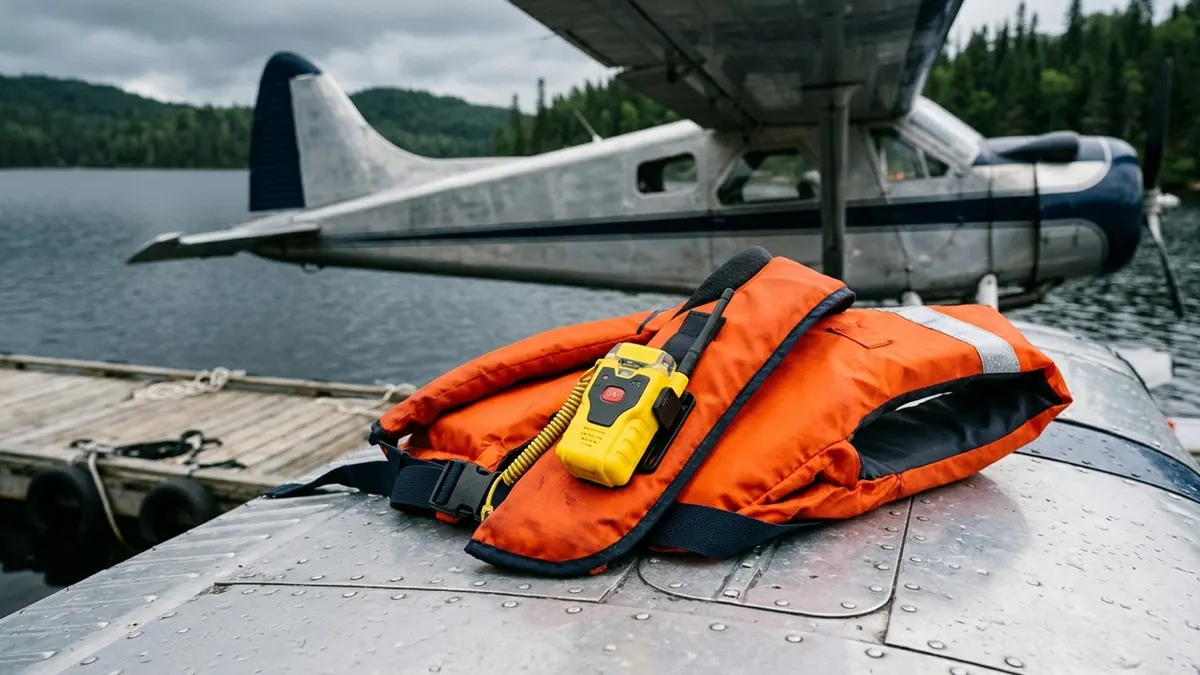
Affiliate disclosure: product links on this page go to Amazon or to the maker's own store. As an Amazon Associate we earn from qualifying purchases, at no extra cost to you; links to makers' own stores earn us nothing. No retailer or brand sees our picks before they are published or has any say in them. How we choose.
For most pilots the ACR ResQLink 400 is the PLB to carry: ACR lists it at 0.317 pounds, buoyant, with GPS and Galileo positioning, a 406 MHz Cospas-Sarsat distress signal plus a 121.5 MHz homing signal, visible and infrared strobes, more than 24 hours of operation, a five-year battery and a five-year warranty. If you want confirmation that rescuers received your alert, the ResQLink View RLS adds Galileo's Return Link Service and a screen.
A PLB is not your airplane's ELT. Under 14 CFR 91.207 most US-registered airplanes need an approved ELT; a PLB is an extra that stays with you, which matters if you leave the airplane, ditch, or the ELT antenna is damaged. Every 406 MHz beacon must be registered (in the US, with NOAA), and ACR says registration lasts two years. All four are sold on Amazon by ACR itself.
Our top picks at a glance
1. Best overall
ACR ResQLink 400 PLB (with pouch)Positioning: GPS and Galileo · Battery: 5 years; 24+ h operating · Screen / RLS: No / no · Warranty: 5 years
2. Best with return link
ACR ResQLink View RLS PLB (2932)Positioning: GPS and Galileo, MEOSAR · Battery: 5 years; 28+ h operating · Screen / RLS: Yes / yes · Warranty: 5 years
3. Best with a screen
ACR ResQLink View PLB425Positioning: GPS · Battery: See ACR · Screen / RLS: Yes / no · Warranty: 5 years
4. Smallest
Ocean Signal rescueME PLB1Positioning: GPS · Battery: 7 years; 24+ h operating at -20 °C · Screen / RLS: No / no · Warranty: 2 years, 5 if registered within 90 days
| Pick | Positioning | Battery | Screen / RLS | Warranty | Buy |
|---|---|---|---|---|---|
| ACR ResQLink 400 PLB (with pouch)Best overall | GPS and Galileo | 5 years; 24+ h operating | No / no | 5 years | Amazon |
| ACR ResQLink View RLS PLB (2932)Best with return link | GPS and Galileo, MEOSAR | 5 years; 28+ h operating | Yes / yes | 5 years | Amazon |
| ACR ResQLink View PLB425Best with a screen | GPS | See ACR | Yes / no | 5 years | Amazon |
| Ocean Signal rescueME PLB1Smallest | GPS | 7 years; 24+ h operating at -20 °C | No / no | 2 years, 5 if registered within 90 days | Amazon |
Best overall
ACR ResQLink 400 PLB (with pouch)
Light, buoyant, GPS plus Galileo, with strobes and a five-year battery and warranty.
- Positioning
- GPS and Galileo
- Battery
- 5 years; 24+ h operating
- Screen / RLS
- No / no
- Warranty
- 5 years
Pros
- 0.317 lb (144 g) and 4.52 by 2.03 by 1.49 inches
- Buoyant, waterproof to 16.4 ft for an hour
- Visible and infrared strobes
- This bundle adds a pouch and carabiner
Cons
- No screen or return-link confirmation
- Battery replacement after five years or any activation
ACR's spec table for the ResQLink 400 lists a 406 MHz signal through Cospas-Sarsat with a 121.5 MHz homing signal for the final stage of a rescue, a multi-constellation GPS and Galileo receiver, visible and infrared strobes, 24+ hours of operation, buoyancy, waterproofing to 16.4 feet for an hour (33 feet for 10 minutes), an operating range of -4 to 131 °F, 0.317 pounds, and a battery to be replaced after five years or after emergency use. Warranty is five years against factory defects.
Carry it on your body (a vest, belt or flight suit pocket), not in the flight bag in the baggage compartment.
Best with return link
ACR ResQLink View RLS PLB (2932)
The ResQLink with a screen and Galileo's Return Link Service, which confirms rescuers got your alert.
- Positioning
- GPS and Galileo, MEOSAR
- Battery
- 5 years; 28+ h operating
- Screen / RLS
- Yes / yes
- Warranty
- 5 years
Pros
- Return Link Service confirms Search and Rescue received the signal
- Digital display shows status
- 28+ hours of operation (per the Amazon listing)
Cons
- The most expensive PLB here
- Larger than the ResQLink 400
ACR's listing for the ResQLink View RLS (PLB-435) describes Return Link Service, which notifies the beacon owner that Search and Rescue has received the distress signal, a digital display, an infrared strobe, GPS, Galileo and MEOSAR compatibility, built-in buoyancy, a five-year battery and 28 or more hours of operating life, with a five-year warranty. Knowing that help is coming is worth a lot after a forced landing in the backcountry.
Best with a screen
ACR ResQLink View PLB425
The ResQLink with an LCD screen and optional text-message self tests, without RLS.
- Positioning
- GPS
- Battery
- See ACR
- Screen / RLS
- Yes / no
- Warranty
- 5 years
Pros
- LCD screen
- Optional 406Link subscription sends self-test messages to contacts
- LED and infrared strobes
Cons
- No return link
- The self-test texting needs a subscription
The ResQLink View PLB425 sends a 406 MHz distress signal with GPS position and a 121.5 MHz homing signal, has an LCD screen, LED and infrared strobes and attachment clips, and is buoyant, per ACR's listing. With ACR's optional 406Link subscription, its self-tests can send messages to your contacts. Five-year warranty.
Smallest
Ocean Signal rescueME PLB1
A very compact PLB with a seven-year battery, for pilots who will only carry something tiny.
- Positioning
- GPS
- Battery
- 7 years; 24+ h operating at -20 °C
- Screen / RLS
- No / no
- Warranty
- 2 years, 5 if registered within 90 days
Pros
- 116 g and 3.0 by 2.1 by 1.3 inches, per Ocean Signal
- Seven-year battery interval
- Waterproof to 15 meters
Cons
- Does not float without the optional flotation pouch
Ocean Signal's spec page lists the rescueME PLB1 at 116 grams and 3.0 by 2.1 by 1.3 inches, with a built-in GPS, a roughly 1-candela LED strobe, more than 24 hours of operation at -20 °C, waterproofing to 15 meters and a seven-year battery interval. The warranty is two years, extended by three more if you register within 90 days. It does not float without Ocean Signal's optional flotation pouch, so clip it to a life vest for overwater flights. It is sold on Amazon by ACR Electronics. Its size makes it the one you will actually keep in a pocket.
Why carry a PLB if the airplane has an ELT?
14 CFR 91.207 requires an approved ELT in most US-registered civil airplanes, with exceptions such as training flights entirely within 50 nautical miles of the departure airport and agricultural operations. The ELT is mounted in the airplane, as far aft as practicable for automatic types, and its battery is replaced after one cumulative hour of use or half its useful life. A PLB adds three things the ELT cannot:
- It stays with you if you leave the airplane: after a ditching, a forced landing where you walk out, or a fire.
- It is independent of the airplane's antenna and wiring, which a crash can damage.
- You activate it yourself, deliberately, and you can see that it is working.
A PLB does not replace a required ELT.
Why 406 MHz matters, in the AIM's words
The FAA's Aeronautical Information Manual explains what changed. Since 2009 the Cospas-Sarsat satellites no longer listen for 121.5 or 243 MHz, so an airplane with only an older analog ELT depends on a nearby ATC facility or an overflying aircraft happening to hear it. A 406 MHz beacon is digital and is encoded with its owner's registration, so when a registered one activates, the rescue coordination center can decode who it belongs to and telephone the contacts on file. The AIM says search and rescue forces respond to 406 MHz alerts almost at once, while for a 121.5 MHz alert their normal practice is to wait for confirmation of an overdue aircraft, which can take hours.
A PLB uses the same 406 MHz system, which is why registering it with NOAA is not paperwork for its own sake: the registration is what turns a signal into a name, an aircraft and a phone number.
The ELT's own upkeep
91.207(d) requires the installed ELT to be inspected within 12 calendar months of its last inspection for proper installation, battery corrosion, operation of the controls and crash sensor, and a sufficient signal from its antenna. Ask when yours was last done; a PLB is a backup to a working ELT, not a reason to neglect it.
Choosing a PLB
406 MHz with GPS
All four picks transmit on 406 MHz through the Cospas-Sarsat satellite system with an embedded GPS position, which tells rescuers where you are, and the ACR models add a 121.5 MHz homing signal for the final search.
Return Link Service
Galileo-enabled beacons with RLS can confirm to you that your alert was received. Only the ResQLink View RLS has it among our picks.
Buoyancy and wearability
For flights over water, carry a beacon that floats (the ACR models do) or attach one to your life vest. Mount it where you can reach it with either hand while strapped in.
Registration
Register a 406 MHz beacon with your national authority before you carry it; ACR says US owners register with NOAA and that registration lasts two years. Registration links the beacon's unique ID to you, your aircraft and your emergency contacts.
How the picks compare
| PLB | Weight | Battery life | Operating time | Floats |
|---|---|---|---|---|
| ACR ResQLink 400 | 0.317 lb | 5 years | 24+ h | Yes |
| ACR ResQLink View RLS | See ACR | 5 years | 28+ h | Yes |
| ACR ResQLink View | See ACR | See ACR | See ACR | Yes |
| Ocean Signal rescueME PLB1 | 116 g (4.1 oz) | 7 years | 24+ h | No |
Building a survival kit for backcountry or overwater flights? Add a flashlight and a handheld radio, and keep the PLB on your body, not in the flight bag.
Frequently asked questions
Does a PLB replace an ELT?
No. 14 CFR 91.207 requires an approved ELT in most US-registered civil airplanes. A PLB is an extra beacon that stays with you if you leave the airplane.
Do I need to register a PLB?
Yes. ACR says 406 MHz beacons must be registered with the national authority, which is NOAA in the US, and that registration lasts two years and must be renewed.
Do PLBs need a subscription?
No. The 406 MHz distress system is run by governments through Cospas-Sarsat. ACR's optional 406Link subscription only adds self-test messages to contacts.
How long does a PLB battery last?
ACR says to replace the ResQLink 400's battery after five years or after emergency use. Ocean Signal lists a seven-year battery for the rescueME PLB1.
What is Return Link Service on a PLB?
A Galileo feature that sends confirmation back to the beacon that Search and Rescue received the distress signal. The ACR ResQLink View RLS has it.
Should a PLB float?
For overwater flying, yes, or attach it to your life vest. The ACR ResQLink models are buoyant; Ocean Signal's PLB1 needs its optional flotation pouch.
Sources
- ResQLink 400 (PLB-400) specifications, ACR Electronics
- 14 CFR 91.207, Emergency locator transmitters, Legal Information Institute
- rescueME PLB1, Ocean Signal
- Aeronautical Information Manual, 6-2-4 Emergency Locator Transmitter (ELT), Federal Aviation Administration
Cover image: Illustration: Aviation Gear Review (AI-generated)
Related guides
Best Carbon Monoxide Detectors for Aircraft (2026): Portable and Built-In
Why the NTSB wants a CO detector in every piston airplane, what kind of alarm it recommends, and five ways to carry one.
Best Red Flashlights and Headlamps for Pilots (2026)
Red light protects night vision but distorts chart colors, so the FAA says keep white light available too. Five lights that do both.

Portable Aviation Oxygen: When You Need It, Pulse-Demand Systems and Oximeters
The FAA's rule and its stricter recommendation, how a pulse-demand system stretches a cylinder, and where a fingertip pulse oximeter fits in.